
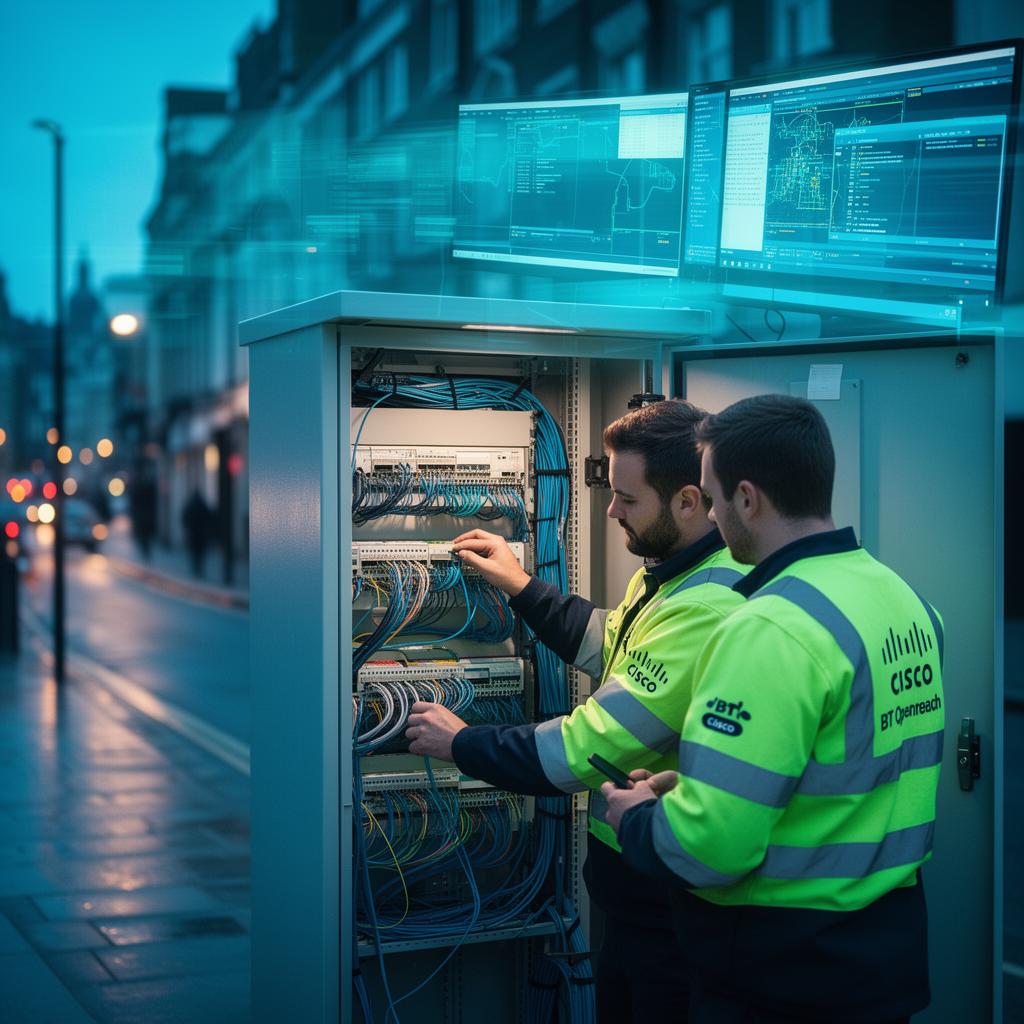
Why connectivity is the single most important IT decision
When connectivity is good, nobody notices. When connectivity is poor, everything else stops mattering: Teams calls drop, Microsoft 365 stalls, the phone system stutters, customer-facing tools become unusable, and your people lose trust in the technology environment as a whole.
For a modern UK business that relies on cloud applications, connectivity is no longer an IT line item - it is the foundation that every other service depends on. Treating it as a commodity purchase based on headline price is the most common and most expensive mistake we see.
The main circuit types, and what each is good for
There are four practical circuit types for UK business sites in 2026, each with a clear sweet spot. Choosing the right one is mostly about matching the bandwidth profile, contention, SLA and uptime requirements of the site to a sensible budget.
- FTTP (Fibre to the Premises) - the workhorse for most small to mid-sized UK sites; symmetric speeds up to 1 Gbps, business-class options with enhanced SLAs and lower contention
- SOGEA (Single Order Generic Ethernet Access) - a sensible fallback where FTTP isn't yet available; runs over the existing copper but removes the need for a phone line
- Leased lines / Ethernet - dedicated, uncontended bandwidth with strict SLAs and four-hour fix; the right answer for sites where the business cannot tolerate outage
- Emergency broadband and 4G/5G failover - secondary connections that keep critical services alive when the primary circuit fails
SD-WAN: when it earns its keep
SD-WAN technology lets a site use multiple internet connections intelligently - prioritising voice and video on the best path, balancing traffic across links, and failing over automatically when one circuit degrades.
SD-WAN is a clear win for businesses with three or more sites, businesses with hybrid teams that rely heavily on cloud applications, and businesses where any downtime costs real money. For single-site organisations with low call volumes, a well-designed leased line plus a 4G/5G backup is usually a better investment.
Resilience design that actually works
Resilience is about avoiding shared points of failure. Two FTTP circuits from the same provider entering the building through the same duct provide no real resilience - if a digger breaks the duct, both circuits fail at the same moment.
Genuine resilience means diverse carriers, diverse physical entry points to the building, diverse local exchanges where possible, and a secondary connection that uses a different technology (typically 4G/5G) for last-mile diversity. Telappliant designs and procures this end-to-end for UK businesses.
- Two carriers, not one
- Diverse physical entry to the building where the building allows
- A wireless backup (4G/5G) that activates automatically when the primary fails
- Voice and video prioritised over file transfers and updates
- Monitoring that alerts you before the failure becomes user-visible
How to buy connectivity without overpaying
Carrier pricing varies dramatically by postcode, building and term length. Two identical-spec circuits at neighbouring buildings can differ by 40% or more in monthly cost simply because of where the local fibre runs. Multi-carrier quoting is the only way to find out.
Telappliant's Ethernet Quote tool returns instant pricing from multiple UK carriers, with realistic install timeframes and SLA options. Use it to baseline before committing to any single supplier - including us.
Managed connectivity: what 'managed' should actually mean
A managed connectivity service should include 24/7 monitoring, proactive incident management, a single point of accountability across multiple carriers, predictable monthly billing, and a clear escalation path when things break.
Telappliant operates as the single point of contact for the entire connectivity stack: circuit ordering, install coordination, monitoring, fault management, carrier escalation, contract renewals and refresh planning. That removes the 'who's responsible?' problem that plagues multi-supplier environments.
Next steps with Telappliant
Run an instant multi-carrier quote on the Ethernet Quote tool, or book a 20-minute connectivity review with our team. We'll tell you straight if your current setup is fit for purpose.
Frequently asked questions
Related reading
Talk to a UK specialist about business connectivity: leased lines, fttp, sd-wan and beyond
Short consultation, honest advice, no pressure.